
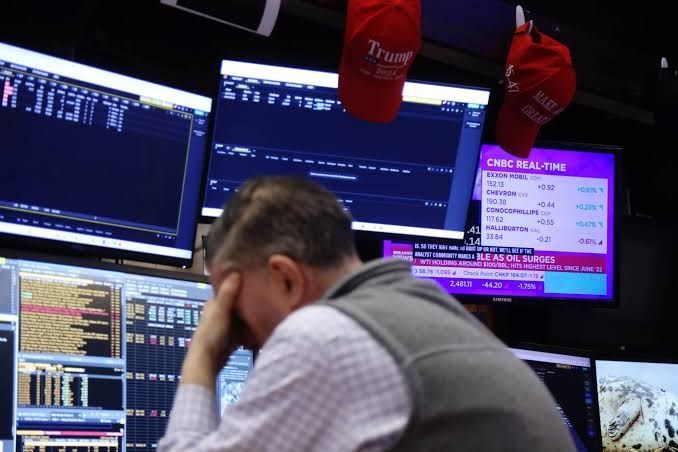
SOUTH-EAST ASIA (Reuters) – Most emerging-market stocks slipped on Friday as intensifying U.S.-Iran hostilities and waning enthusiasm for chip stocks globally weighed, while currencies were flat to lower against a stable dollar.
MSCI’s global EM stocks index lost 2.7% and was heading for its steepest weekly losses in nearly three weeks, while the currencies gauge dipped 0.2%, though looked set to log marginal weekly gains.
Semiconductor stocks have been under pressure this week despite chipmaker TSMC’s upbeat second-quarter earnings and chip-equipment manufacturer ASML’s forecast raise, as investors booked profits and remained concerned about the sustainability of the AI-driven rally.
“The inability of such impressive results to trigger a positive market reaction shows one thing: valuations across chipmakers have run ahead of themselves,” said Ipek Ozkardeskaya, senior analyst at Swissquote Bank.
Ozkardeskaya said investors were growing uncomfortable with enormous AI spending that could lead to rising leverage risks.
Taiwan’s tech-heavy benchmark index tumbled 6.5% on Tuesday, the most since U.S. President Donald Trump’s “Liberation Day” tariffs, while Chinese blue-chip stocks fell 3.6%. Futures tied to the U.S. Nasdaq dipped 2%.
South Korean equities remained shielded as markets were closed for a holiday.
The risk-off mood spilled into other EMs, as most emerging Europe stocks lost ground. Polish blue-chip stocks slipped 0.8% and Hungary’s main index declined 0.5%, while the Romanian benchmark was off 0.2%.
Meanwhile, intensifying tensions in the Gulf between the U.S. and Iran increased fears of a prolonged energy supply disruption and dampened prospects for the global economic outlook, putting markets under further strain.
“Inflation has surprised to the downside in most EMs, in part reflecting contained food price pressures,” said analysts at Barclays in a note.
“A hiking premium seems warranted despite softer inflation prints, as the direction of travel is still higher for U.S. rates, and energy prices remain volatile.”
The International Energy Agency said that global energy security is at risk if oil supplies through the Strait of Hormuz do not increase soon. Oil prices were heading for their biggest weekly gain in nearly three months.
The dollar index held steady, but was poised for weekly declines as soft U.S. inflation reports this week dimmed expectations for an imminent Federal Reserve rate hike in July.
South Africa’s rand edged 0.5% lower, while its stocks slid 1%.
Turkey’s lira was muted while its stocks were down 1.8%.
Most emerging European currencies traded lower against the euro, with the Hungarian forint and Polish zloty slipping 0.4% each. The latter was set for its seventh week of declines – its longest since 2022.
Elsewhere, Ukraine’s President Volodymyr Zelenskiy proposed a top security official as its new defence minister. Zelenskiy’s dismissal of the former defence minister had led to protests in the country.
Fitch is scheduled to review its ratings on Turkey and Kenya later in the day.
HIGHLIGHTS: ** China set to leave benchmark lending rates unchanged for 14th month in July ** How Korean stocks turned from trusty bellwether to AI frenzy ** Malaysia’s economy grew 5.8% yr/yr in Q2, official estimate shows
Reporting by Utkarsh Hathi and Purvi Agarwal; Additional reporting by Shashwat Chauhan in Bengaluru; Editing by Jan Harvey. — Reuters