
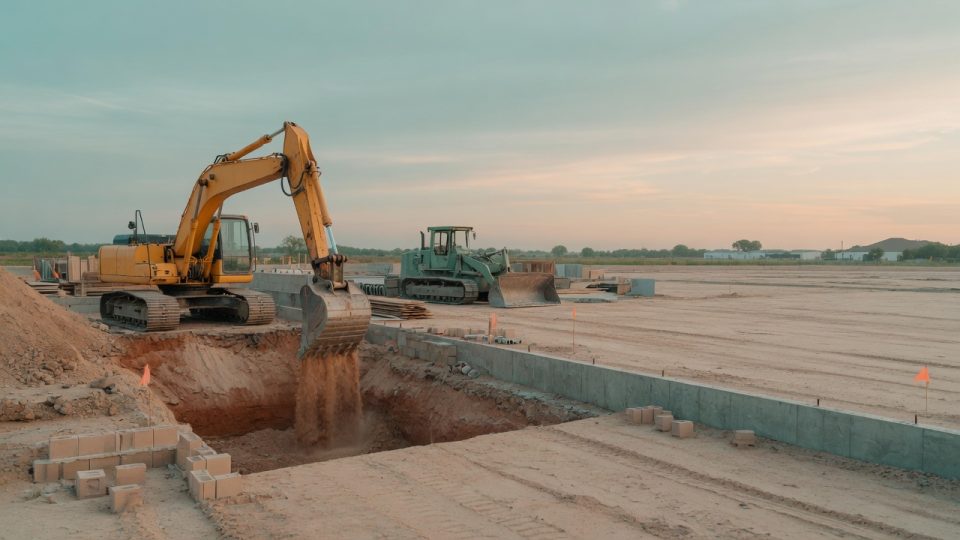
TerraFirma raised approximately $115 million, including a $100 million Series A led by Kleiner Perkins on July 14, 2026. The funding is intended to accelerate the company’s work on construction technology for critical infrastructure on Earth and potential space applications.
The announcement highlights participation from several venture capital firms and angel investors with relevant expertise. This round stands out due to its size and the involvement of prominent backers in the infrastructure and technology space.
Funding Round Overview
The verified total of approximately $115 million with a $100 million Series A led by Kleiner Perkins on July 14, 2026, establishes the scale of capital committed to TerraFirma’s expansion plans. This structure follows standard venture patterns where the lead investor sets terms and attracts additional participants. The primary announcement specifies allocation toward engineering, manufacturing, operations, and construction team growth rather than other uses.
Series A rounds typically provide capital after initial validation to scale operations in hardware and software integration. In this case the mechanics involve direct application to team expansion for tech-enabled infrastructure projects. Investors evaluate such rounds by examining the lead firm’s history in similar sectors and the company’s stated focus on automation for earthworks.
Criteria for assessing participation include confirmation of the lead investor’s track record in technology scaling and alignment with critical infrastructure needs. The round meets basic thresholds when the announcement provides clear totals and participant lists from primary sources. Verification requires cross-checking the July 14, 2026, Business Wire release against company statements.
Limitations include the absence of disclosed valuation, exact equity terms, or detailed breakdown beyond general team expansion. The announcement date means full financial specifics may emerge later through regulatory filings or follow-up updates. Mars applications remain stated goals without current operational data attached to the funding.
A practical example involves directing the capital to hire specialists in AI-enabled software and collaborative robotics to support existing Texas deployments. This mirrors the stated intent in the press release for accelerating construction capabilities. The example illustrates how funds translate into operational capacity without assuming unstated outcomes.
Typical mistakes include treating the total raise as immediately available for all mission elements or overlooking the distinction between the $100 million Series A and the approximate overall figure. Another error occurs when readers assume complete use-of-funds transparency from the initial release alone. Checking the primary source dated July 14, 2026, avoids these issues.
Key Investors and Participation
The confirmed participants include Bain Capital Ventures, Glade Brook Capital Partners, BANNER VC, Saga Ventures, Trust Ventures, Definition, PEAK6, Magnetar Capital, and Ravelin Capital along with angel investors from SpaceX, Anduril, Base Power, Shinkei, and Hadrian. This mix combines institutional firms with individuals possessing direct experience in space and defense technologies. The structure signals coordinated interest in construction automation from multiple angles.
Investor participation mechanics center on the lead’s ability to draw aligned capital that supports hardware-software integration for heavy equipment. Each listed firm contributes based on sector overlap with infrastructure or autonomy. The announcement lists these entities explicitly without additional commentary on individual motivations.
Criteria for evaluating the investor group focus on relevance to the company’s dual Earth and space positioning. Strong alignment appears when participants have prior exposure to robotics or critical infrastructure projects. The presence of SpaceX-connected angels meets this criterion through shared engineering backgrounds.
Limitations arise from the lack of stated investment amounts per participant or specific strategic reasons beyond the general infrastructure focus. Secondary interpretations may emphasize space elements more than the primary release, which prioritizes Earth construction acceleration. No performance guarantees accompany the participation details.
A practical example shows how angel investors from Anduril and Hadrian could contribute perspectives on reliable systems for high-stakes environments, directly supporting the semi-autonomous equipment development. This connection follows from the listed affiliations in the July 2026 announcement. The example demonstrates practical value without extending beyond verified facts.
Typical mistakes involve assuming uniform investment sizes across participants or projecting unstated synergies between the listed firms. Readers may also err by expecting immediate joint projects from the angel group. Relying solely on the official participant list prevents such overextensions.
Company Mission and Technology Focus
TerraFirma develops semi-autonomous heavy equipment systems and human-in-the-loop autonomy solutions using AI-enabled software, novel processes, and collaborative robotics. This approach targets faster, cheaper, and safer construction for earthworks and critical infrastructure. The mission explicitly connects Earth solutions to principles applicable for future Mars settlements through the same engineering methods.
The mechanics operate by combining AI software for decision support with human oversight to maintain control in variable site conditions. Collaborative robotics handle repetitive tasks while operators intervene as needed. Official materials describe this integration as the core method for addressing labor shortages and safety risks in infrastructure projects.
Criteria for selecting this technology type include requirements for reliability in critical infrastructure where full autonomy poses unacceptable risks. The human-in-the-loop element satisfies safety standards common in heavy equipment operations. Alignment with existing construction workflows serves as an additional selection factor.
Limitations center on the aspirational nature of Mars applications, which lack any current operational projects or timelines. Specific performance metrics such as speed improvements or cost reductions remain undisclosed in primary sources. The technology description stays at the system level without granular technical specifications.
A practical example applies the systems to earthworks grading where AI assists in path planning and robotics execute movements under supervision. This matches the company homepage description of making construction safer through integrated processes. The example illustrates current Earth-focused use while noting the long-term space connection.
Typical mistakes include expecting fully autonomous operation without human involvement or assuming immediate applicability to space environments. Another error involves overlooking the emphasis on collaborative robotics in favor of assuming complete replacement of traditional methods. Reviewing the mission page clarifies these boundaries.
Leadership and Background
Co-founders Noah Schochet as CEO and Noah McGuinness as CTO bring backgrounds from SpaceX and Princeton University. Their combined experience informs the company’s direction in applying autonomy and robotics to construction challenges. Company materials present this leadership as foundational to bridging space-derived engineering with infrastructure needs.
The mechanics of leadership influence appear through prior work on high-reliability systems that translate to semi-autonomous heavy equipment. Princeton training supplies engineering fundamentals while SpaceX exposure contributes knowledge of extreme-condition operations. These elements shape decisions on human-in-the-loop design.
Criteria for evaluating founders in this sector include demonstrated expertise in autonomy and hardware integration. Relevant prior roles at organizations handling complex engineering projects strengthen the assessment. Shared academic and professional paths between co-founders add consistency to the vision.
Limitations include the absence of details on additional executive team members or specific contributions from each founder beyond titles and backgrounds. No quantitative measures of prior project outcomes are provided in available materials. The information remains at the summary level from the homepage.
A practical example shows how SpaceX experience supports development of systems for critical infrastructure by emphasizing reliability under variable conditions. This directly relates to the Texas site deployments completed in 2025. The example connects leadership background to operational results without additional assumptions.
Typical mistakes involve attributing unverified achievements to the founders or assuming identical transferability of space methods to all construction scenarios. Readers may also overlook the Princeton component when focusing only on industry experience. Sticking to the listed credentials on the official site avoids these errors.
Real-World Deployments

TerraFirma has completed deployments on multiple job sites in Texas, including site excavation for a Starbucks project in North Austin in 2025 and site preparation for a Zachary Cole Foundation retreat center in Taylor, Texas, also in 2025. These instances demonstrate application of the semi-autonomous systems to earthworks and grading tasks in commercial and foundation settings.
The mechanics involve deploying heavy equipment with AI software and collaborative robotics under human supervision to perform excavation and preparation work. Site conditions in Texas provided testing grounds for the technology in real environments. The projects predate the July 2026 funding and serve as validation points.
Criteria for successful deployments include suitability for earthworks where precision and safety matter, such as urban-adjacent or rural sites. The chosen projects meet this by involving standard grading and excavation without requiring specialized space conditions. Verification relies on company-reported examples from the homepage.
Limitations encompass the lack of disclosed metrics on time savings, accuracy improvements, or cost outcomes from these sites. No additional locations or post-2025 projects appear in primary materials. The examples remain illustrative rather than comprehensive performance data.
A practical example centers on the North Austin Starbucks excavation where equipment handled site preparation under the described autonomy model. This shows integration with standard construction timelines in a commercial context. The Taylor retreat center project similarly applied the systems to foundation site work in a different terrain setting.
Typical mistakes include generalizing results from these two Texas projects to all infrastructure types or expecting quantified benefits without supporting data. Another error occurs when assuming the deployments include space-related elements. The 2025 timeline and Earth focus in the reports provide the accurate scope.
Investment Context in Infrastructure Tech
This funding round may attract attention from investors tracking construction automation and critical infrastructure sectors due to the verified scale and participant diversity. The July 14, 2026, announcement provides a factual basis for understanding capital flows into tech-enabled earthworks without requiring external projections. The dual focus on Earth operations and long-term space principles adds a distinct positioning element.
Investor evaluation mechanics involve reviewing primary sources for totals, leads, and participants before considering technology descriptions. Alignment with sectors experiencing labor and efficiency pressures serves as a key filter. The round meets attention criteria when multiple established firms participate alongside specialized angels.
Criteria for further examination include confirmation of team expansion plans and prior deployments as indicators of operational readiness. Investors assess fit by matching the company’s automation approach against portfolio needs in infrastructure. The absence of revenue figures requires reliance on qualitative mission statements.
Limitations stem from the recent announcement date, which means ongoing updates on team growth or new projects may alter the picture. Mars elements stay aspirational with no operational linkage to the funding. Secondary reports may shift emphasis but primary materials remain the reference for core facts.
A practical example of next steps involves accessing the Business Wire release for the complete investor list and then checking the company homepage for updates on Texas-style deployments. This sequence allows tracking of how the capital supports engineering and operations teams. The example provides a direct method for ongoing monitoring.
Typical mistakes include speculating on valuation or future returns from the available details or conflating the Earth projects with immediate space outcomes. Another error involves ignoring the caveats around undisclosed metrics when forming assessments. Consistent reference to the July 14, 2026, primary announcement and official site minimizes these risks.