
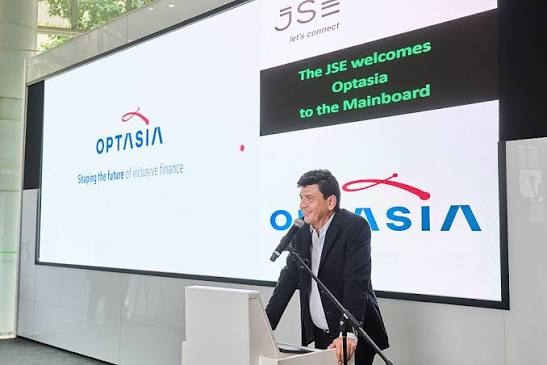
South Africa-listed fintech company Optasia, said it expects revenue for the first half of 2026 to increase by between 50 percent and 60 percent compared with the same period last year, driven by strong performance in Ghana, Pakistan, Indonesia and the Republic of Congo
The positive trading update excited investors, sending Optasia’s shares up more than six percent on the Johannesburg Stock Exchange (JSE), marking the company’s biggest rally since its stock market debut in November.
The performance comes despite a two-month disruption to its Airtime Credit Services (ACS) business in Nigeria following changes to regulations governing non-traditional lending. Although Nigeria remains one of the company’s important markets, growth in other countries helped cushion the impact of the setback.
Read also: The hidden risk behind airtime loans
The company confirmed that the Nigerian airtime credit service resumed operations last week after the regulatory issues were resolved.
Optasia described its latest performance as proof of the resilience of its business model, saying its wider presence across emerging markets has reduced dependence on any single country.
The company said it continued to deepen relationships with partners, expand its product offerings and enter new markets during the review period.
As part of that expansion, Optasia launched operations in Gabon and South Sudan while introducing its first merchant lending solution, which it plans to roll out across its existing markets.
The company’s microfinance business has become its strongest growth engine, contributing about 72 percent of total revenue during the first half of the year.
Management also reaffirmed its full-year 2026 guidance, expecting both revenue and adjusted earnings before interest, tax, depreciation and amortisation (EBITDA) to grow by more than 30 per cent.
The company’s growth story has also attracted strong institutional backing. Earlier this year, South African banking giant FirstRand increased its stake in Optasia from 20 percent to 26.1 percent after initially investing nearly R5 billion in the fintech company.
Founded in 2012, Optasia has evolved into one of the largest AI-powered digital lending platforms serving emerging markets. The company says it distributes more than $15 million in credit every day, processes about 1.5 billion credit decisions each month and operates in 38 countries.
Its business model combines artificial intelligence, mobile technology and telecommunications networks to provide instant credit and other digital financial services, particularly to underserved populations with limited access to traditional banking.
The company believes the long-term opportunity remains significant as mobile financial services continue to reshape financial inclusion across Africa and other developing markets.
Sub-Saharan Africa remains the world’s largest mobile money market, with telecom operators increasingly partnering fintech firms to deliver credit, payments and other financial products through mobile phones.
Optasia said independent market research commissioned before its stock market listing showed strong structural demand for mobile-first lending solutions across emerging economies, reinforcing its long-term expansion strategy.
Read also: CBN, CreditRegistry lead drive for real-time, data-driven lending systems
Why it matters
Optasia’s latest results underline a growing reality in Africa’s fintech sector: regulatory changes in one market no longer determine the fortunes of companies with diversified regional operations. While Nigeria remains Africa’s biggest fintech market, companies with broad footprints across multiple emerging economies are increasingly better positioned to absorb regulatory shocks and sustain growth.
The results also reinforce investor confidence in AI-driven digital lending as demand for fast, mobile-based financial services continues to expand across developing markets, where millions remain outside the formal banking system.

Get Newsletter Updates
Enjoying our column?
Subscribe to our specialised **Tech Pulse** feed to receive fresh reports and analyses directly in your inbox.

