


With a number of family offices and other private clients on its roster, the private equity firm recently talked to this news service about the dynamics shaping Africa”s market.
The private equity story and how it fits into wealth management
portfolios hasn’t yet become front-page news in Africa, but
momentum appears to be building.
Last June, Enko
Capital, a $1.6 billion AuM African-focused asset management
firm managing debt, private debt, equity and private equity
investments across Africa, welcomed a commitment from the
International Finance Corporation (IFC) into its new impact
private credit fund.
The Enko Impact Credit Fund (EICF), Enko’s first private credit
vehicle, was launched in the final three months of last year with
$100 million of committed capital from a range of development
agencies, an African pension, an insurance company, and a family
office.
Enko manages capital on behalf of almost 50 family offices and
wealth managers worldwide. Family office and wealth managers are
invested in almost all Enko’s funds across both public and
private markets. Interest from investors outside Africa varies
and is affected by the relative performance of assets in other
parts of the world, it says. Most investors inside Africa are
largely restricted from investing outside their domestic or
regional market, making them captive to their local market.
EICF’s objective is to invest in a diversified portfolio of US
dollar-denominated senior secured and unsecured debt to mid-sized
corporates in sub-Saharan Africa, excluding South Africa.
“It could be that this year, Africa will be one of the biggest
contributors to global growth,” Cyrille Nkontchou (pictured
below), who founded Enko in 2008 – a tough year for global
markets – told WealthBriefing in a recent
interview.
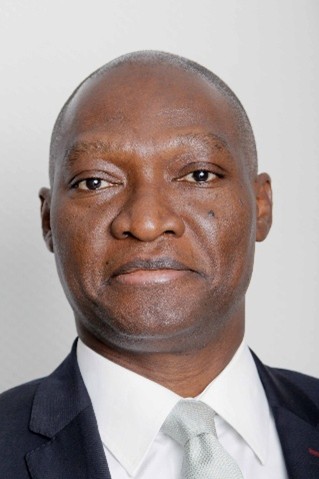
Cyrille Nkontchou
While dominant investors in African private equity have been
development agencies, the dynamic is shifting. There are more
local players such as pension funds getting involved in private
equity in Africa. “There’s definitely a shift there,” Nkontchou
said.
“With the notable exception of South Africa, the capital market
in Africa is tiny in relation to the size of its GDP, but there
is huge room to grow,” he said. “A lot of local pension funds
here are flush with cash and are increasingly channelling part of
these savings to the private sector. Every time we bring a good
equity asset to these markets, it’s over-subscribed.”
A clutch of Africa-focused private equity firms, including Helios
Investment Partners ($3 billion-plus capital raised)
and Actis Capital, are involved in sustainable
infrastructure, in particular the energy, infrastructure, and
real estate asset classes. Actis was formed in 2004 as a spinout
of CDC Group plc (formerly the Commonwealth Development
Corporation), an organisation established by the UK Government in
1948 to invest in developing economies in Africa, Asia, and the
Caribbean. Other private equity firms in the category
are Development Partners International, African Capital
Alliance, and Ethos Private Equity.
Regionally, in West Africa, there are firms/funds such as Verod
Capital Management (with a Nigeria focus), and Sahel Capital. On
the East Africa side, there are firms such as Ascent Capital
Africa. Ethos Private Equity has a strong focus on Southern
Africa. For North Africa, an example is Mediterrania Capital
Partners.
Exits
Nkontchou said examples of successful private equity exits are
increasing, giving the case of his own firm’s exit from a telecom
infrastructure services company. That firm was set up in Cote
d’Ivoire in 2009 by two local entrepreneurs and grew to become a
pan-African giant by the time Enko exited the investment in 2023.
Recent moves by Enko private equity include buying a
controlling stake in a leading banking group in Mauritania
through a consortium; it also acquired Burger King’s business in
the Ivory Coast; both acquisitions were from international
owners.
Infrastructure
One important area of private equity investment in Africa is
infrastructure, Nkontchou said. “It is an obvious one given the
estimated investment deficit gap of close to $70 billion to $100
billion per annum in Africa infrastructure investment, resulting
in lots of opportunities for capital deployment,” he said.
Africa’s GDP growth, albeit from a low base is significant
(compared with certain developed countries and other
emerging markets), is an important part of the background, with
annual GDP growth forecasts outpacing even Asian emerging
markets, he said. The African Development Bank has estimated that
Africa’s GDP grew by 4.2 per cent last year.
“There is a fundamental difference in the primary drivers of
performance in private equity in Africa versus developed
markets; what’s driving performance of private equity investments
in developed markets over the past few years has been the
availability of cheap leverage, whereas in Africa, what is
driving private equity performance is superior real growth,”
Nkontchou said.
Africa is well placed to capture the “leapfrogging” impact of
adopting new technologies (digital banking, mobile apps, etc)
without the burden of legacy systems or technologies. Across
Africa, there is an approximate total of $1.1 trillion of
domestic savings owned by pension funds, much of which is held in
government-run retirement schemes. “The bulk of these savings has
traditionally been used to fund local government debt, but that
is increasingly going to fund the private sector,” Nkontchou
continued.
There is some activity and growth on the primary side of the
capital market (both debt and equity), but activity on the
secondary markets is muted. Given their relatively small size,
for domestic African firms, the most successful exit from a
controlled PE investment will often involve a sale to a larger
international business, he said.
WealthBriefing asked Nkontchou about the trend of lot of
large private equity firms delaying their exits and returning
money to investors – a process that is causing frustration. (This
partly explains why large houses such as Blackstone, KKR and
Carlyle have built private wealth channels.)
Enko
Enko manages nine funds and a range of separate accounts and
vehicles all focused on Africa. EAPEF I, Enko’s first pan-African
private equity fund made seven investments and exited six within
the 10-year life of the fund. The fund’s current DPI (Distributed
to Paid-In) ratio is 1.4 times. Like most private equity funds
globally and in Africa, the fee model is typically 2 per cent per
annum in annual management fee (increasingly lower than that) and
20 per cent performance fee over a hurdle of 8 per cent per
annum.
The firm targets private equity strategies with a net annual
internal rate of returns between 15 per cent and 20 per cent in
US dollar terms.
WealthBriefing asked Nkontchou if he sees value in
investors owning different fund “vintages” to spread risks
between funds.
“Successful risk management in private equity is about selecting
the best managers and limiting uncontrollable macroeconomic risks
linked to economic cycles by spreading investments between funds
of different vintages,” he replied. Nkontchou said Enko uses
limited leverage because often leverage costs are prohibitive
given the high interest rates environment prevailing in most
African countries.
Nkontchou brings investment banking and wider financial sector
experience to his role.
Prior to starting the firm, Nkontchou was managing director and
founder of LiquidAfrica Holdings, a pan-African investment bank
specialising in capital raising and trading in all African
markets. Before starting that firm in 2000, he was the head of
Sub-Saharan research at Merrill Lynch in London. Before joining
Merrill Lynch, Nkontchou was a manager at Accenture in Paris,
specialising in financial markets. He holds a BA in economics
from Institut d’Etudes Politiques de Paris and an MBA from
Harvard Business School.